

Great ingredients
are what we do
We use great vegetables that would otherwise be wasted and turn them in to ingredients for amazing, healthy foods that can be either vegan, vegetarian or 'hybrid'.
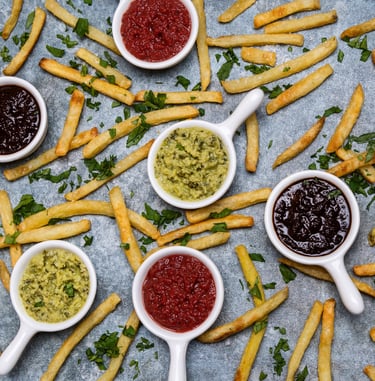
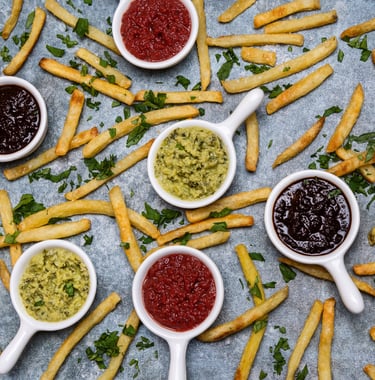
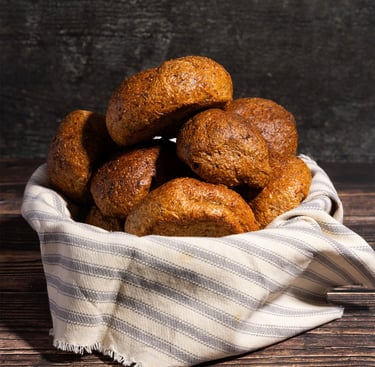
Some foods made using our products are shown below.
Non-allergenic
healthy food ingredients that diversify protein sources
Innovative food ingredients partner
We provide non-allergenic, nutritious, and sustainable vegetarian protein products, transforming unused plants into healthier food options for the manufacturing industry, ensuring great taste with a lower environmental impact. Broccoli is considered a good source of prebiotic fibre. The fibre content also allows you to modify the food 'matrix' helping you to deliver nutrition more effectively.
We achieve this using a technology 'stack' that includes a patent-protected automated selective harvester, machine learning approaches and data analytics, and a patent-filed production process.
Nutritious choices, lower CO₂ footprint
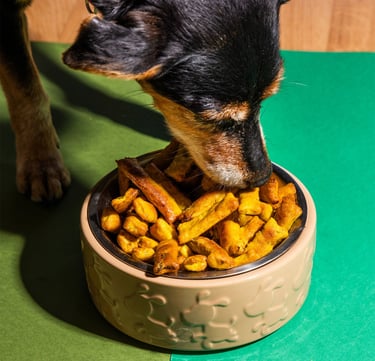
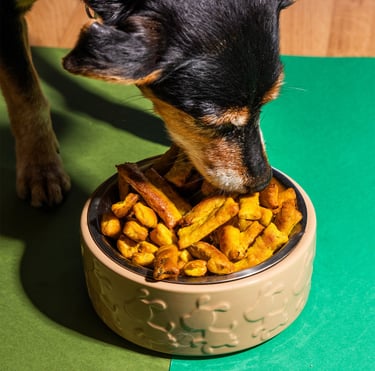
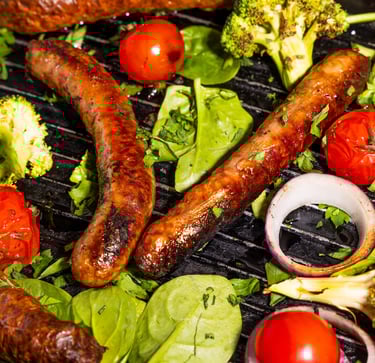
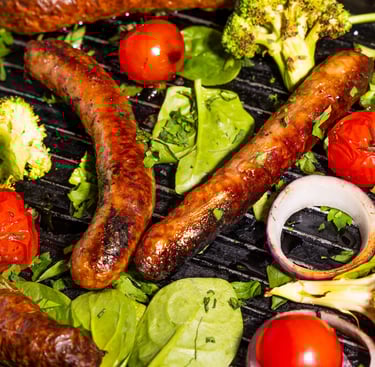
Our versatile products enhance various foods, including sausages, burgers, sauces, and even pet food, promoting sustainability while delivering exceptional taste and mouthfeel that consumers love.
By partnering with us as an ingredients partner, food manufacturers can drive down CO2 to help them hit their Scope 3 targets, while also reducing production costs and improving the nutritional value of their products - a 'triple win'.
30%+ protein, 30%+ fibre, 30% natural sugar [1] provided as wet or as powder.
Prota Plus will have an increased protein content
Applications:
Burgers, smoothies, soups, sauces
15%+ protein, 55%+ fibre, 15% natural sugar [1] provided as wet or dried.
Applications:
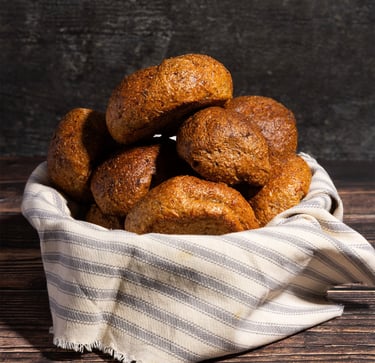
Sausages, breads, cakes, pet food
Neutral-coloured natural
protein and carbohydrate
Applications:
Ice cream
Egg substitute, charged proteins
Applications:
Haircare products, baked products, mayonnaise
Sulforaphane
and polyphenols
Applications:
Supplements
[1] Nutritional content calculated by dry weight











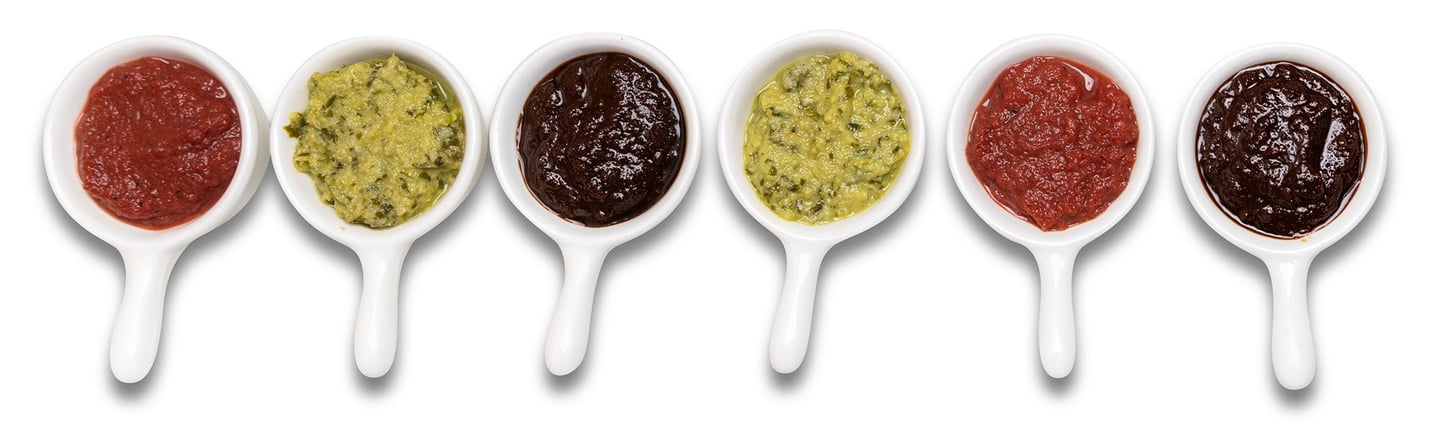
25g of natural sugar per litre, can be diluted to need
Applications:
Feedstock for mycelium growth, precision fermentation or Anaerobic Digestion ('AD')
Our ingredients can be provided in a number of forms: chilled, dried and frozen so they can fit with current production workflows and equipment.


In development
In development
In development
In development
We are a 'B2B' company that helps food manufacturers produce great-tasting environmentally sustainable, non-allergenic and healthier food. We fractionalise vegetable matter in to consistent products that have many uses.

With active shipments and BRCGS certification imminent, we are designed to win on cost, reliability, and scalability, while compounding advantage as volumes, SKUs, and applications expand.
Why UPP vs alternatives?
UPP is built to win on system-level economics, not single-product optimisation.
Unlike fermentation-led platforms, single-ingredient suppliers, or science-first food technologies, UPP optimises the entire chain from harvest through processing to ingredient release. This allows us to use feedstocks others cannot economically process, convert natural variability into margin through multi-SKU outputs and blending pathways, and scale through replication of proven modules rather than capital-intensive monolithic plants.
For food manufacturers, this means lower risk, reliable supply, and flexible ingredients that integrate easily into existing formulations. For investors, it means capital efficiency, faster learning, and downside protection, with optionality that is deliberately gated and revenue-linked.
vs fermentation platforms: UPP avoids binary batch risk and long learning cycles by designing for graceful failure, blending, and utilisation across multiple SKUs.
vs conventional ingredient manufacturers: UPP delivers higher value per tonne through system integration, feedstock flexibility, and functional versatility.
vs science-first foodtech: UPP operates within established regulatory frameworks, enabling near-term commercial supply rather than long-dated approval risk.

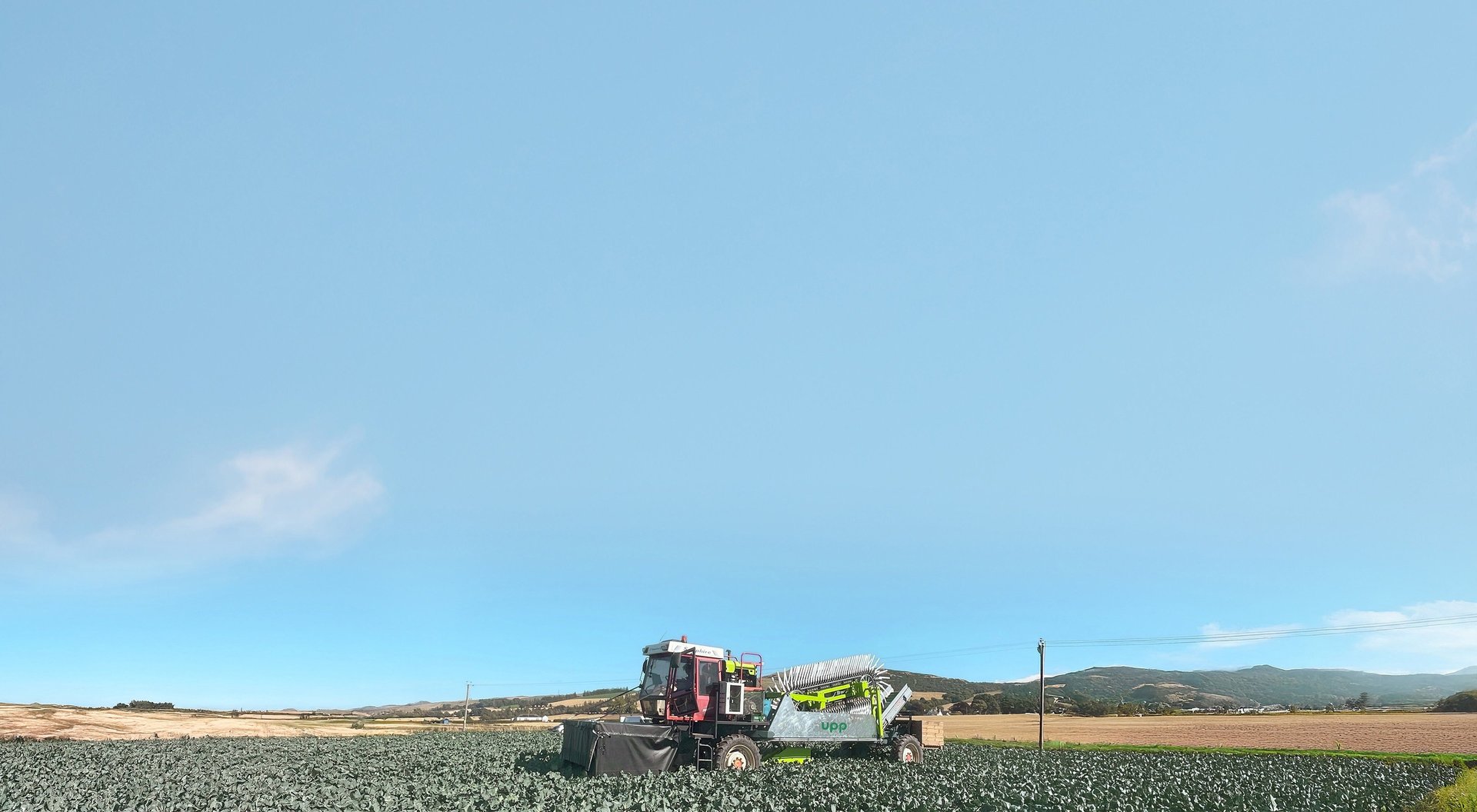
We have a patented Automated Selective Harvester ('Harvesta') that transforms the economics of broccoli harvest.
Currently broccoli is harvested by hand, making it an expensive vegetable due to the high cost of harvest, partly as a field will require several passes by a large team of farm workers. We change that, and in addition we allow the nutritious stalk to be taken off the field so we can process it using our patent-filed process to produce our Prota, Fiba, Necta and Ova. By making harvest less costly, reducing crop lost due to insufficient labour, and sharing the value from the side-stream, we improve the financial sustainability of farmers.
In addition, we use machine learning approaches (a subset of Artificial Intelligence) to select which heads to cut on each pass, which means we image every plant on each pass.
As a result, we rapidly build up a unique picture of the field that we are turning into a data portal ('Intellia') that will give insight to support farmers in extending 'precision agriculture'. Using the 'big data' we generate, we aim to supply farmers intelligence they need but do not have, allowing insight that will help them to optimise their harvest activity and manage their crop and land better, further improving efficiency.
By using crop that would otherwise be waste to displace that grown for use (e.g., soy) we reduce CO₂.
By displacing food grown far away (e.g., South America) with food grown locally, we reduce food miles (and hence CO2). By using what would otherwise be left to rot we reduce methane emission. Finally, by gathering data to help farmers be more efficient, we will reduce carbon intensity. We allow a '4X-win' in terms of Green House Gas ('GHG') reduction.


We exist to solve two of the world’s food related challenges: Where the sustainable alternatives to animal-derived protein will come from, and addressing the challenge of disappearing farm labour and the resulting food security issues.


We focus on evidence and analysis
We believe it is important to take an evidence-based approach.
We work with the James Hutton Institute to help us deliver great products from cutting edge research and commercial laboratories to ensure our benchmarks are valid.
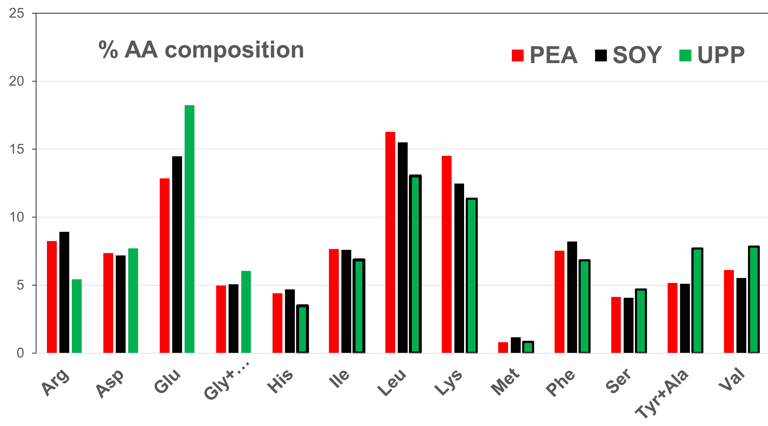
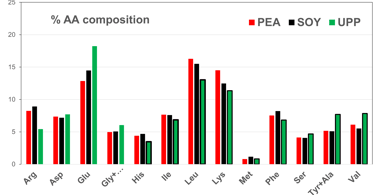
The amino acid composition of our products are similar to pea and soy protein and contains all the essential amino acids.
However, unlike wheat and soy, broccoli is not in the Top 14 allergens or listed on the two main allergen databases (Compare and AllergenOnline), supporting that it is hypoallergenic, thus removing a risk for food manufacturers and consumers.
Get in touch
Keep updated
© 2024. All rights reserved.
+44 1952 327 357
welcome@upp.farm
Upcycled Plant Power ('UPP') Limited
trading as "UPP" and "Freya"
Company number: 14171122
VAT Number: 428 2222 17
Registered address:
Agri-Tech Centre
Poultry Drive, Edgmond,
Newport, Shropshire
United Kingdom TF10 8JZ
Connect with us
A list of trademarks/brands can be found here

