

Sustainable nutritious plant-based allergen-free protein and fibre ingredients
enabling low-risk, low-friction improvement of existing products.
All images of food on this website are of food made using our products but are for illustrative purposes only as we are a B2B ingredients company and do not sell to consumers or retailers.
We supply food producers with 'clean', allergen-free, nutritionally-dense, vegan food ingredients with low CO₂ and low food-miles at multi-tonne daily capacity
Food producers can use our ingredients to deliver products with the taste and mouthfeel that consumers love, but with reduced Scope 3 CO2, and avoiding the regulatory and consumer uncertainty associated with novel food technologies. Production currently operates under robust pre-certification quality systems with HACCP implemented, and BRCGS certification targeted following the audit scheduled for February 2026. SEDEX is in progress.
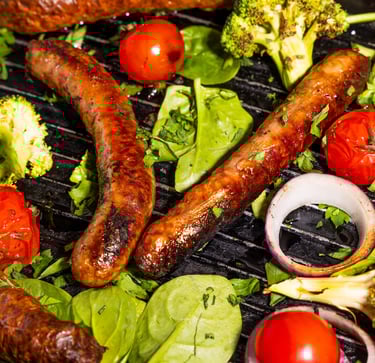
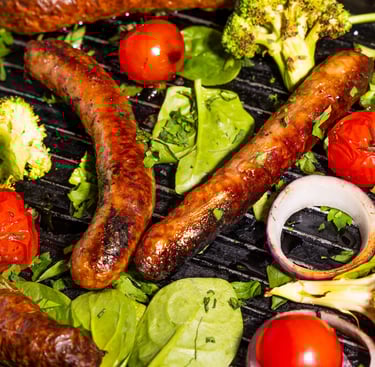
'Clean' protein and fibre, available today at muti-tonne scale, for producing great, nutritious food.
Commercially ready
Year-round production
Multi-tonne daily capacity
HACCP implemented
BRCGS–scheduled (Feb 2026)
SEDEX in progress
Independent LCA complete, <0.25 kg CO₂e/kg
Why food producers work with us
Easy to integrate
Drop-in ingredient formats
'Clean' back-of-packet
Inclusion rates of 4–20%
Benign cooking behaviour
Application support
Products contain none of the UK/EU 14 declarable allergens
Reliable supply
UK-based production
Non-commodity feedstocks
UK/Spain origin
Stable pricing
Reduced import/FX exposure
Clear scale-up roadmap from 1,000 to 10,000 t.p.a
Let us supply you allergen-free, plant-based protein and functional fibre at commercial scale - with enterprise-grade food safety, predictable supply, and low integration risk.

We transform underutilised parts of existing crops into nutritious, allergen-free protein and fermented fibre
Innovation in sustainable natural food ingredients
We supply specification-grade ingredients produced through a repeatable process designed to manage natural variability, crucially we work within today's regulatory framework and are deployable now.
Inclusion rates of 4-20% are possible without changing mouthfeel or taste, and can be used to optimise 'back of packet' or cost position.
Our multi-SKU and blending architecture ensures consistent performance, reliable supply, and flexible formulation reducing risk for product development and procurement teams.
We will scale through disciplined replication of proven modules. In combination this reduces scale-up risk, improves capital efficiency, and compounds cost advantage as volumes grow.
More nutritious and lower in cost
Using our ingredients incurs a low "switching cost" for the food manufacturer due to the benign cooking behaviours and the resulting ease of development, testing and scaling. In addition, we offer integration support to help producers deliver their target outcomes in terms of a balance of desired taste, mouthfeel, environmental impact and margin using our ingredients.
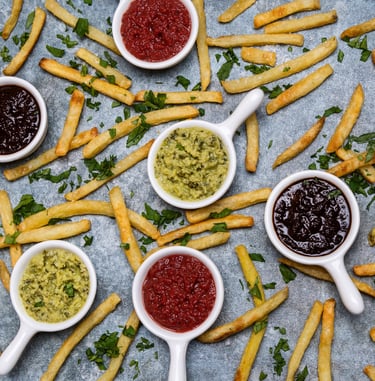
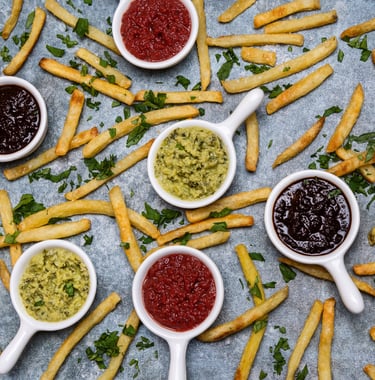
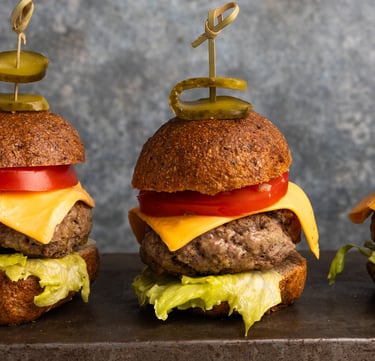
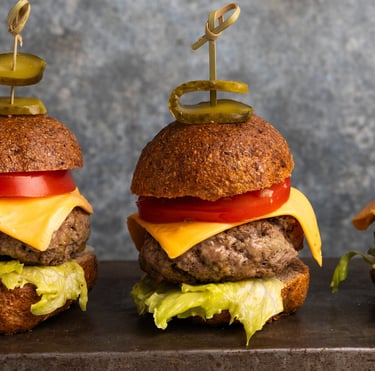
For example, in the the 'naturally better burger' (shown left) we incorporated our vegetable-ingredients at an inclusion rate of 20% into a meat burger patty without disrupting the look, taste and mouthfeel. We also supplemented the sauce and the bread. Other examples of development of 'hybrid' products using our ingredients include beef+bean+broccoli burgers (the "Triple B") and sausage rolls. While we love working to "hybridize" meat products as part of "improve rather than remove", our vegan ingredients can also be used in vegetarian products such as pasta and sauces (such as shown above).
In doing this, we enable food producers to hit their CO₂ reduction targets, while giving the consumer the product they love; one that is more nutritious and can be lower cost with better margins. In another example, a vegeburger manufacturer worked with us to achieve a 10% reduction in total ingredient cost.
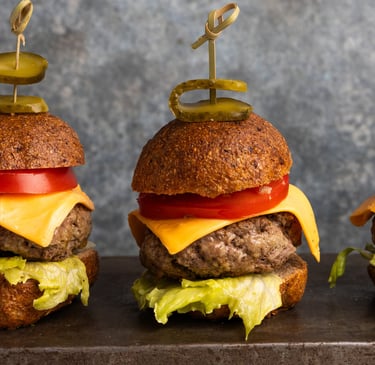
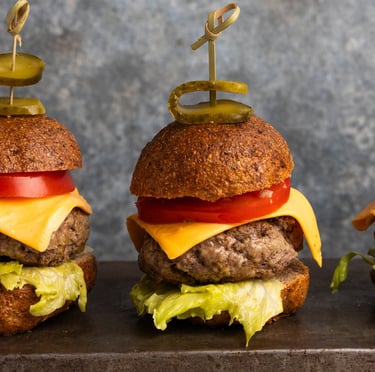
A case study of what this enables: The 'naturally better burger'
Tier 1 food producers, retailers and food service providers are working with us to develop new products and enhance existing lines.

Industry leaders are joining our mission
Food producer trials = 22
Food producers in SAQ = 8
1st commercial shipment = 2025
Expected in supermarkets = H2 2026
A major supermarket has encouraged its suppliers to engage with us.
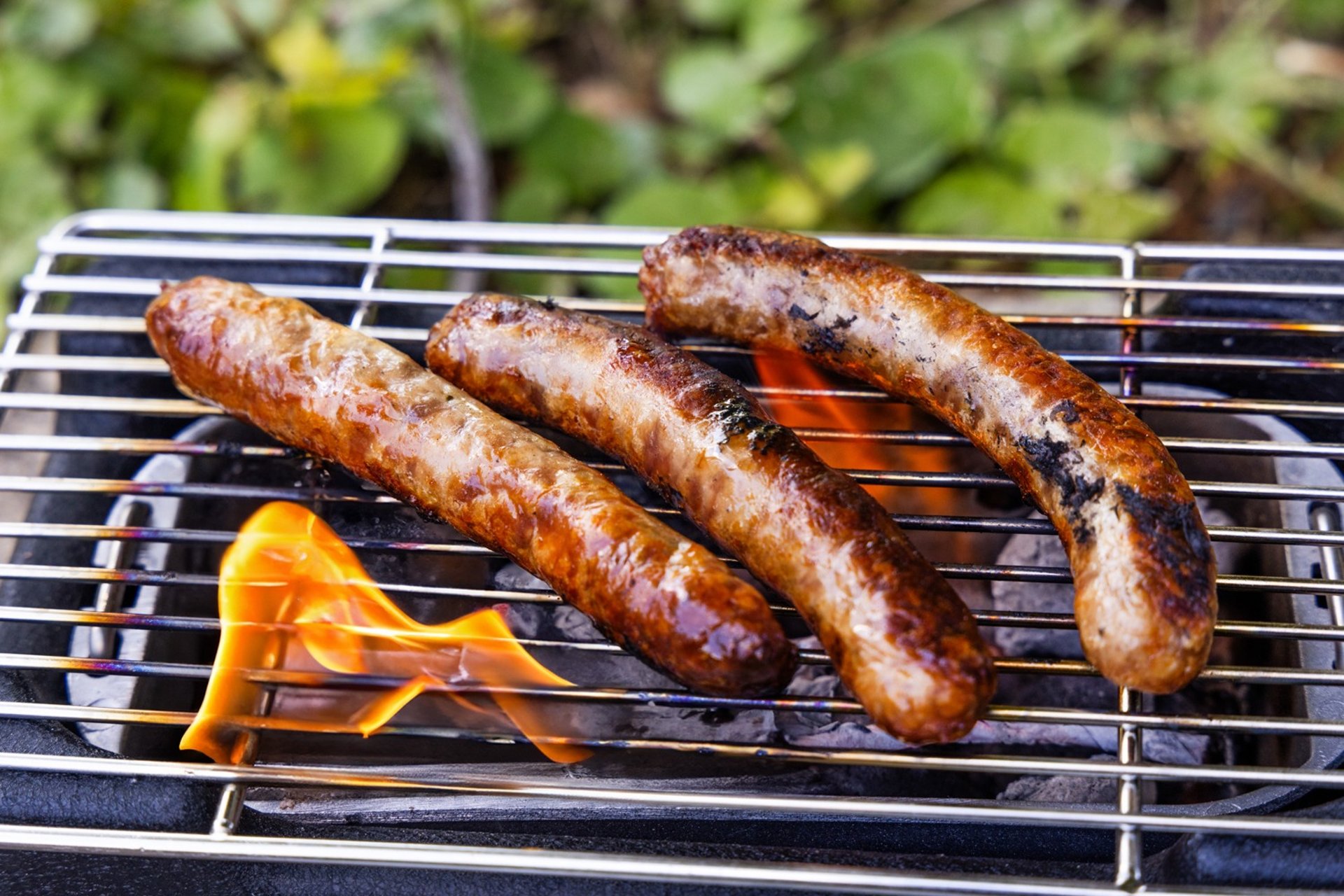
Working with Harper Adams University we have delivered sausages using their locally reared pork that taste just as great, but have less meat and no or reduced need for addition of sulphites, to deliver the "naturally sustainable sausage".
'Hybrid' does not have to be restricted to meat/plant but could include mixing our products with (for instance) mycelium-based products to offer a lower-cost solution with varied health and taste/mouthfeel characteristics. This enables the food producer to serve the growing need for planet-friendly healthy food options.
Delivering
'hybridization'
to improve
sustainability
High-quality nutritious protein and fibre
Our products are produced from brassicas, providing highly-nutritious allergen-free vegan ingredients, rich in natural bioactive compounds such as sulforaphane and polyphenols, allowing 'biofortification' of foods where the food is not heat treated. Our products can be used to 'hybridize' meat products to reduce CO2 footprint and improve health benefits, but can also be used in soups, smoothies, breads, cakes and even pet food and potentially hair care products.
Broccoli is considered a good source of prebiotic fibre. Prebiotics are important because they help feed the beneficial bacteria in the gut, promoting a healthy digestive system
Good for the environment
We use the plants grown for supermarkets, but which are not used, and we turn them into ingredients that can be stored and incorporated into everyday foods. As a result, the CO2 footprint is superior to many alternatives.
Sustainable in many ways
Even if broccoli protein was grown for purpose, it's CO2 footprint would a fraction of that of soy or pea protein. In addition, we produce regionally - unlike soy and pea protein that may be be shipped half way round the world - so have lower 'food miles'. Finally, what we use would otherwise rot to produce methane, making our products 'planet positive'. As importantly, we improve the financial sustainability of local farmers that provide the 'side-stream'.


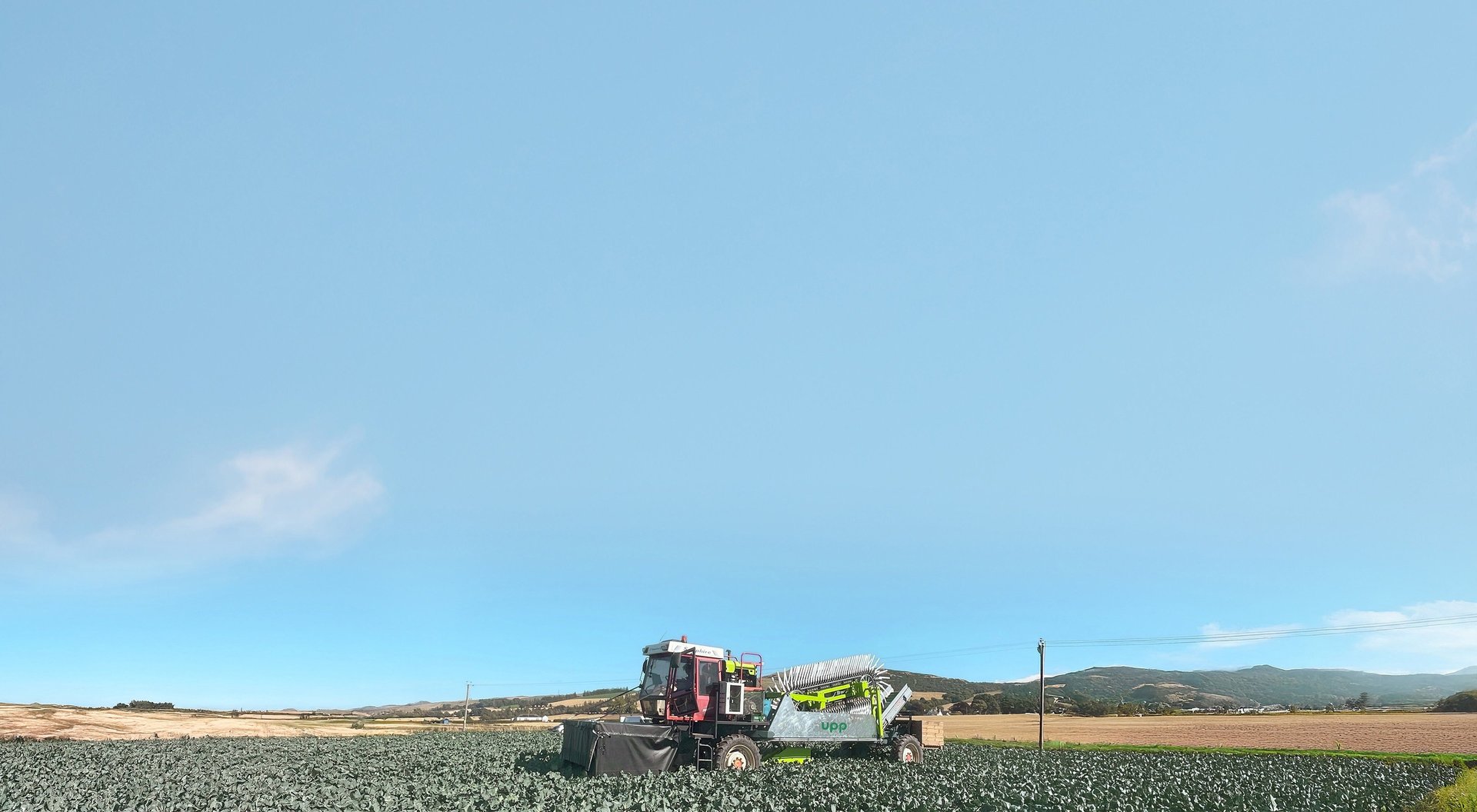
We have a patented Automated Selective Harvester ('Harvesta') that transforms the economics of broccoli harvest.
Currently broccoli is harvested by hand, making it an expensive vegetable due to the high cost of harvest, partly as a field will require several passes by a large team of farm workers. We change that, and in addition we allow the nutritious stalk to be taken off the field so we can process it using our patent-filed process to produce our Prota, Fiba, Necta and Ova. By making harvest less costly; reducing crop lost due to insufficient labour; and sharing the value from the side-stream, we improve the financial sustainability of farmers.
Our ISO 9001 certified Harvesta has been trialled in Scotland and Lincolnshire, and we expect commercial deployment in the UK in 2026 and internationally in 2027, allowing year round access to feedstock at scale (i.e., "supply continuity"). We only supply sufficient Harvestas to meet our feedstock needs in order to manage our own CAPEX.
In addition, we use machine learning approaches (a subset of Artificial Intelligence) to select which heads to cut on each pass, which means we image every plant on each pass.
As a result, we rapidly build up a unique picture of the field that we are turning into a data portal ('Intellia') that will give insight to support farmers in extending 'precision agriculture'. Using the 'big data' we generate, we aim to supply farmers intelligence they need but do not have, allowing insight that will help them to optimise their harvest activity and manage their crop and land better, further improving efficiency.
By fractionalizing crop that would otherwise be waste to displace that grown for use (e.g., soy) we reduce CO2.
By displacing food grown far away (e.g., South America) with food grown locally, we reduce food miles (and hence CO2). By using what would otherwise be left to rot we reduce methane emission. Finally, by gathering data to help farmers be more efficient, we will reduce carbon intensity. We allow a '4X-win' in terms of Green House Gas ('GHG') reduction.


The lowest-friction way for major food manufacturers to cut Scope 3 CO2 and cost while improving nutrition, using allergen-free, spec-grade brassica ingredients, enabled by a proprietary harvest-to-ingredient system that scales.





Our operating philosophy
System-level change: Use integrated technology from harvest through processing to create value from previously nil-valued feedstocks that others cannot economically utilise.


Capital discipline: Replicate proven, standardised modules into multiple smaller lines, reducing scale-up risk, commissioning time, and capital intensity. Additional capital will be committed only once target unit economics, repeatable batch performance, and confirmed customer pull are achieved
Value maximisation: Maximise value per tonne of input by supporting multiple SKUs from a single process, using defined blending pathways to convert variability into margin and structured downgrade routes to ensure full utilisation. Our model is designed to maintain margins and utilisation under feedstock variability where fermentation systems incur write-offs.

Sequenced optionality: Exploit optionality through rapid learning and gated, sequential expansion into new products and feedstocks, committing capital only once defined technical and commercial criteria are met.
Commercial focus: Win on system-level cost, reliability, and flexibility across ingredient applications, rather than on single-product optimisation. As volumes increase, our cost advantage compounds through higher utilisation and broader blending optionality.
Join our mission
We are a system-level ingredient company that converts underutilised crop side-streams into specification-grade ingredients at scale.
By optimising the entire chain from harvest through processing, we unlock feedstocks others cannot economically use and convert natural variability into margin through multi-SKU outputs and defined blending pathways.
Rather than betting on capital-intensive monolithic production facilities, we will scale by replicating proven, standardised modules, reducing risk, shortening commissioning time, and improving capital efficiency.
With safety certification imminent and active commercial shipments, we are 'built to win' on system-level cost, regulatory simplicity, reliability, flexibility and optionality across ingredient applications.
Get in touch
Keep updated
© 2024. All rights reserved.
+44 1952 327 357
welcome@upp.farm
Upcycled Plant Power ('UPP') Limited
trading as "UPP" and "Freya"
Company number: 14171122
VAT Number: 428 2222 17
Registered address:
Agri-Tech Centre
Poultry Drive, Edgmond,
Newport, Shropshire
United Kingdom TF10 8JZ
Connect with us
A list of trademarks/brands can be found here


An interim Life Cycle Analysis (LCA) is here