Great ingredients are what we do: Allergen-free and from a transparent supply chain
Allergen Statement
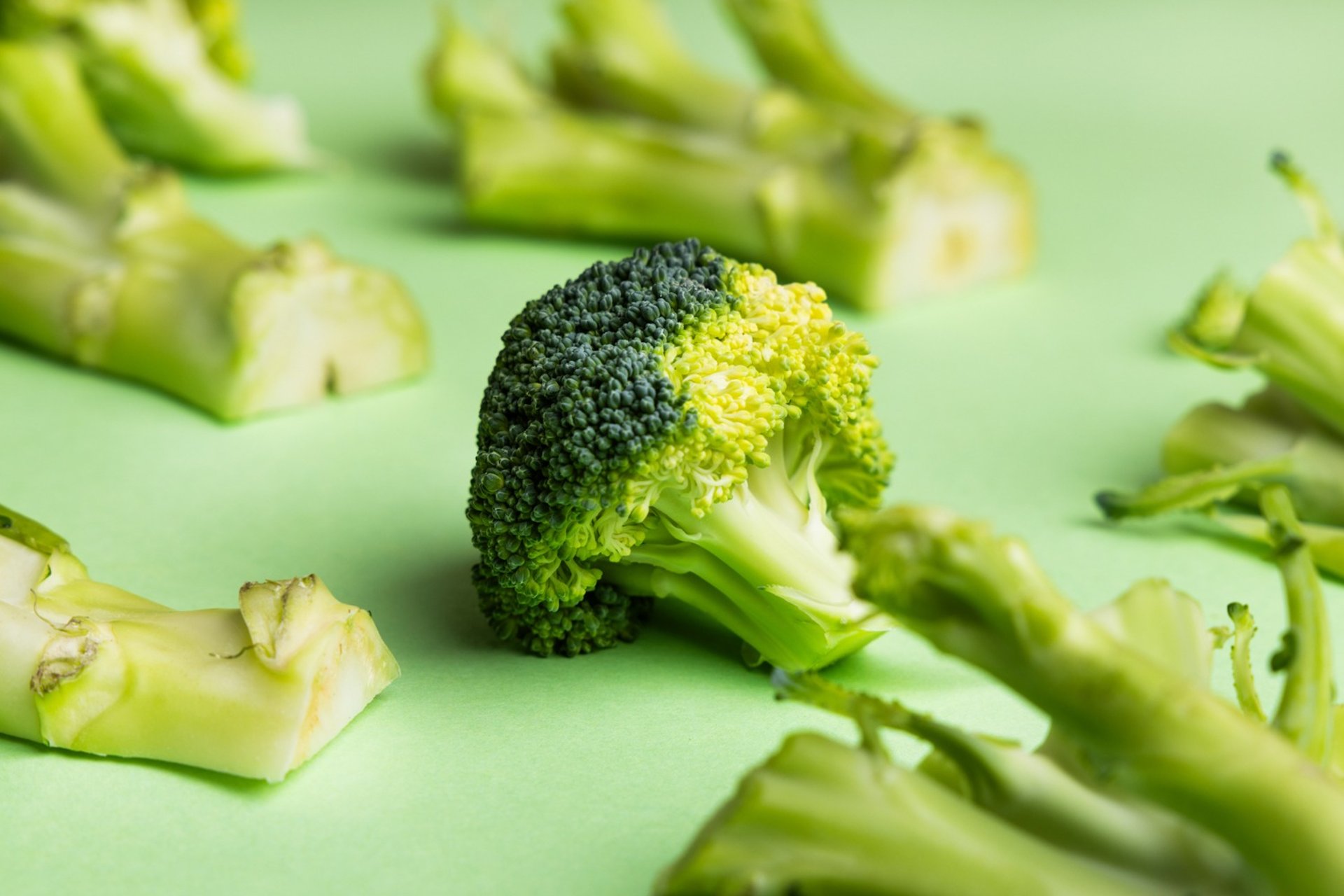
Our ingredients are produced from vegetable crop side-streams (primarily brassica crops such as broccoli) and are free from the 14 allergens requiring declaration under UK and EU Food Information Regulations. The following allergens, as defined under UK/EU FIC, are not intentionally used in the manufacture of our ingredients:
Cereals containing gluten (wheat, rye, barley, oats, spelt, kamut)
Crustaceans
Eggs
Fish
Peanuts
Soybeans
Milk (including lactose)
Nuts (tree nuts)
Celery
Mustard
Sesame
Sulphur dioxide and sulphites at concentrations of more than 10 mg/kg or 10 mg/litre in terms of total SO₂
Lupin
Molluscs
We operate under a food safety management system with documented allergen risk assessments, segregation controls, validated cleaning procedures, and supplier assurance programmes. No ingredients containing the 14 declared allergens are intentionally introduced into the production environment. Cross-contact risk with declared allergens is assessed as low under our HACCP plan; full documentation is available on request.
Traceability Statement
The Company operates full batch traceability across its harvest-to-ingredient platform in accordance with BRCGS Food Safety Standard requirements.
Traceability is maintained across the following stages:
Processing & conversion
Raw material batch IDs are retained through all processing stages
Process parameters, yields and downgrades are logged digitally
Blending pathways are controlled and documented to ensure consistency
Finished ingredient
Finished goods are assigned a finished product lot code
Each lot code is traceable back to:
input crop batches
processing line
production date
QA release status
Distribution
Dispatch records link finished product lot codes to customer deliveries
Recall capability
We can perform one-step-forward / one-step-back traceability and execute a full product recall within 4 hours, in line with customer and regulatory requirements.
Anti-Nutritional Composition Statement
Like all whole foods, brassica crops including broccoli naturally contain certain compounds commonly described as "anti-nutritional factors." No whole food is entirely free of these compounds. Anti-nutrients occur naturally across virtually all plant-based foods, where they form part of the plant's own biology [1]. A food with zero anti-nutritional content is not a realistic or meaningful benchmark. These compounds are also not inherently negative: many are associated with potential health benefits, and may support antioxidant activity, help reduce inflammation, and contribute to gut and metabolic health [1][2].
In broccoli, the principal compounds of this type include glucosinolates and their breakdown products (such as goitrogenic isothiocyanates), oxalates, phytates (phytic acid), and nitrates. Peer-reviewed research notes that broccoli and related cruciferous vegetables generally contain these glucosinolates at concentrations well below those likely to produce any physiological effect when consumed, as generally prepared, as part of a varied diet [2]. Oxalate levels in broccoli are also low relative to vegetables such as spinach and chard [3].
For a typical adult eating normal dietary amounts, broccoli's anti-nutritional factors are not considered harmful and are far outweighed by its nutritional benefits; cooking further reduces goitrogens and glucosinolates [2]. Certain individuals — for example those with thyroid conditions or iodine deficiency — may wish to moderate intake of raw cruciferous vegetables [2].
Our ingredients are derived from brassica crop side-streams and undergo controlled processing. Processing steps can affect the levels of naturally occurring compounds, and the residual content in our finished Fiba, Bynda and Prota ingredients depends on crop input and process parameters. We do not make claims about specific residual concentrations on this page; compositional and analytical data for a given specification are available on request. We assess the presence of these naturally occurring compounds within our food safety management system and HACCP plan, alongside our allergen, traceability and contaminant controls. Full documentation is available on request.
References:
[1] Harvard T.H. Chan School of Public Health, The Nutrition Source — nutritionsource.hsph.harvard.edu/anti-nutrients/
[2] Petroski, W. & Minich, D.M. (2020), "Is There Such a Thing as 'Anti-Nutrients'? A Narrative Review of Perceived Problematic Plant Compounds", Nutrients 12(10):2929 — pmc.ncbi.nlm.nih.gov/articles/PMC7600777/
[3] Korus, A., et al. (2011), "Retention of oxalates in frozen products of three brassica species…", Food Chemistry — sciencedirect.com/science/article/abs/pii/S0140700711001150
Country-of-Origin Statement
Our ingredients are produced under a short, transparent UK supply chain designed to minimise food miles, reduce Scope 3 emissions, and ensure supply resilience.
Crop origin: United Kingdom (during UK growing season) or Spain (during UK off-season) sourced from UK pack-houses. Primary sourcing from UK grower partners (and their Spanish partners), including organised grower groups
Processing: United Kingdom. Ingredients manufactured at UPP’s facility in the UK
Finished ingredient country of origin: United Kingdom. Where multiple UK farms contribute to a production batch:
Country of origin remains UK/Spain
Full farm-level traceability is retained internally
Customer documentation will state:
“Country of origin: United Kingdom / Spain (multiple UK/Spanish farms)”
Future expansion model (forward-looking disclosure): As we replicates our modular production model internationally:
Country of origin will reflect the country of harvest and manufacture
UK-manufactured ingredients will remain clearly segregated from non-UK production
Get in touch
© 2026. All rights reserved.
Upcycled Plant Power ('UPP') Limited
trading as "UPP" and "Freya"
Company number: 14171122
VAT Number: 428 2222 17
Registered address:
Agri-Tech Centre
Poultry Drive, Edgmond,
Newport, Shropshire
United Kingdom TF10 8JZ
Connect with us
Broccoli is a natural source of vitamin K and contains folate, potassium and beta-carotene, a provitamin A carotenoid. Our Fiba, Bynda and Prota products are a source of fibre, making them nutritionally valuable ingredients.
"Allergen-free" refers to the absence of the 14 allergens requiring declaration under UK/EU FIC. See here for our Allergen statement.

+44 1952 327 357