
Reformulation really matters, it's no longer just about innovation - It's about execution
For much of the past decade, reformulation has been framed as a question of ambition ...new ingredients, new technologies, new claims.
In practice, reformulation rarely fails because food producers lack ideas. It fails because it introduces too much friction into systems that are already under pressure. Today’s large food manufacturers are balancing:
persistent ingredient cost volatility
labour and supply-chain constraints
Scope 3 emissions targets moving from aspiration to audit
intensified retailer and customer scrutiny
increasingly conservative capital environments
all while maintaining taste, texture, safety, availability, and margin. In this environment, the most valuable reformulation strategies are not those that promise transformation, but those that enable change without disruption. Low-friction reformulation is no longer optional. It is becoming a strategic requirement.
The hidden cost of reformulation friction
Every reformulation introduces risk — but not all risks are equal. High-friction reformulation typically brings some combination of:
changes to existing processing lines
new allergen or regulatory complexity
uncertain supply at scale
unproven sensory performance
additional approval cycles with retailers
Each of these adds cost, delays decisions, and increases the chance that projects stall internally — even when the sustainability or innovation case is strong. This is why many reformulation programmes quietly revert to incremental tweaks rather than the step-changes that cost pressure, resilience, and climate targets increasingly demand.
The constraint is not intent ... It is friction.
Why the operating reality has changed
What’s different today is not consumer appetite for better food — it’s the operating context behind the scenes. Food producers are now operating in a world where:
ingredient volatility is structural, not cyclical
labour availability constrains agricultural and processing inputs
Scope 3 accountability is becoming auditable, not theoretical
capital discipline matters as much as speed
In this environment, reformulation strategies that rely on novel biology, bespoke infrastructure, or fragile supply chains are harder to justify — even when they are technically impressive. The winning strategies are those that reduce risk while delivering change.
What low-friction reformulation actually means
Low-friction reformulation is not about avoiding innovation. It is about designing innovation around existing food systems, rather than asking food systems to adapt around innovation. In practical terms, low-friction ingredients are those that:
integrate into existing manufacturing processes with minimal modification
behave predictably across standard unit operations (hydration, cooking, freezing, extrusion)
arrive with procurement-grade documentation: traceability, allergen clarity, origin, certification
are available at meaningful scale from reliable, regionally anchored supply
reduce environmental impact without introducing consumer unfamiliarity
This is not a compromise position. It is a deliberate strategy to unlock adoption at speed.
Why system-level thinking matters more than ingredient novelty
One of the consistent lessons in food innovation is that isolated optimisation creates downstream problems.
A low-carbon ingredient with a fragile supply chain creates operational risk
A cost-effective input that introduces new allergens increases approval friction
A novel protein that excites R&D but stalls in procurement delivers no impact at scale
By contrast, system-level approaches — where harvest, processing, supply assurance, and compliance are considered together — remove friction before it appears. When ingredients are designed from the outset to align with how food is actually grown, processed, audited, and sold, reformulation becomes a commercial decision, not a speculative one.
Low-friction reformulation reduces consumer risk too
Low-friction reformulation also lowers consumer acceptance risk. Many sustainability-led innovations ask consumers to change behaviour:
accept unfamiliar ingredients, tolerate different textures, or pay a premium for virtue.
Low-friction approaches avoid that trap.
By focusing on familiar crops, familiar formats, and behind-the-scenes improvements — such as better utilisation of existing agricultural outputs — the consumer experience remains stable even as the system improves. The fastest-scaling changes in food are rarely the most visible ones.
The strategic upside for food producers
For large food manufacturers, the benefits of low-friction reformulation compound:
faster internal alignment between technical, procurement, and commercial teams
shorter approval cycles with retailers and brand partners
lower execution risk at scale
credible Scope 3 reductions tied to operational change, not offsets
optionality to reformulate further without rebuilding infrastructure
In an environment where resilience is as important as differentiation, these advantages matter.
Progress that fits the system
The food system does not need disruption for its own sake. It needs progress that fits. Low-friction reformulation recognises a simple truth: the fastest way to change the food system is not to fight its constraints, but to design within them — and quietly remove them over time.
For food producers under pressure to deliver cost control, sustainability, and reliability simultaneously while meeting QA on-boarding requirements, this approach is not conservative.
It is pragmatic. It is scalable. And increasingly, it is the only way change actually happens.
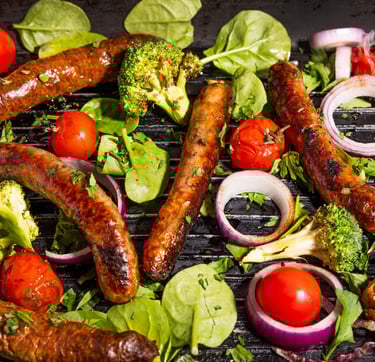





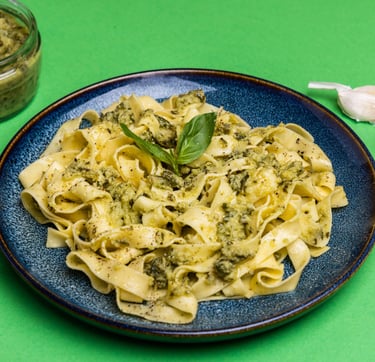


We give food manufacturers a low-friction reformulation lever (improved nutrition, CO₂ down, cost down.)



Get in touch
© 2026. All rights reserved.
Upcycled Plant Power ('UPP') Limited
trading as "UPP" and "Freya"
Company number: 14171122
VAT Number: 428 2222 17
Registered address:
Agri-Tech Centre
Poultry Drive, Edgmond,
Newport, Shropshire
United Kingdom TF10 8JZ
Connect with us
Broccoli is a natural source of vitamin K and contains folate, potassium and beta-carotene, a provitamin A carotenoid. Our Fiba, Bynda and Prota products are a source of fibre, making them nutritionally valuable ingredients.
"Allergen-free" refers to the absence of the 14 allergens requiring declaration under UK/EU FIC. See here for our Allergen statement.




+44 1952 327 357