Minimally processed by design
Novel and non-novel status
Product and Regulatory Positioning: We enable the incorporation of nutritionally valuable vegetable components into everyday foods in a simple, practical, and familiar way but at industrial scale.
Our initial product portfolio has been deliberately designed with the intention of aligning with established non-novel food criteria under UK law based on ingredient history, processing methods, and comparable conventional food processes. We believe our current products sit outside retained EU 2015/2283.
Unlike some biotechnology-driven approaches, such as precision fermentation, which may involve genetically modified microorganisms and therefore require novel food authorisation, our first products do not use genetic modification or engineered organisms. We do not use GMO-derived side streams.
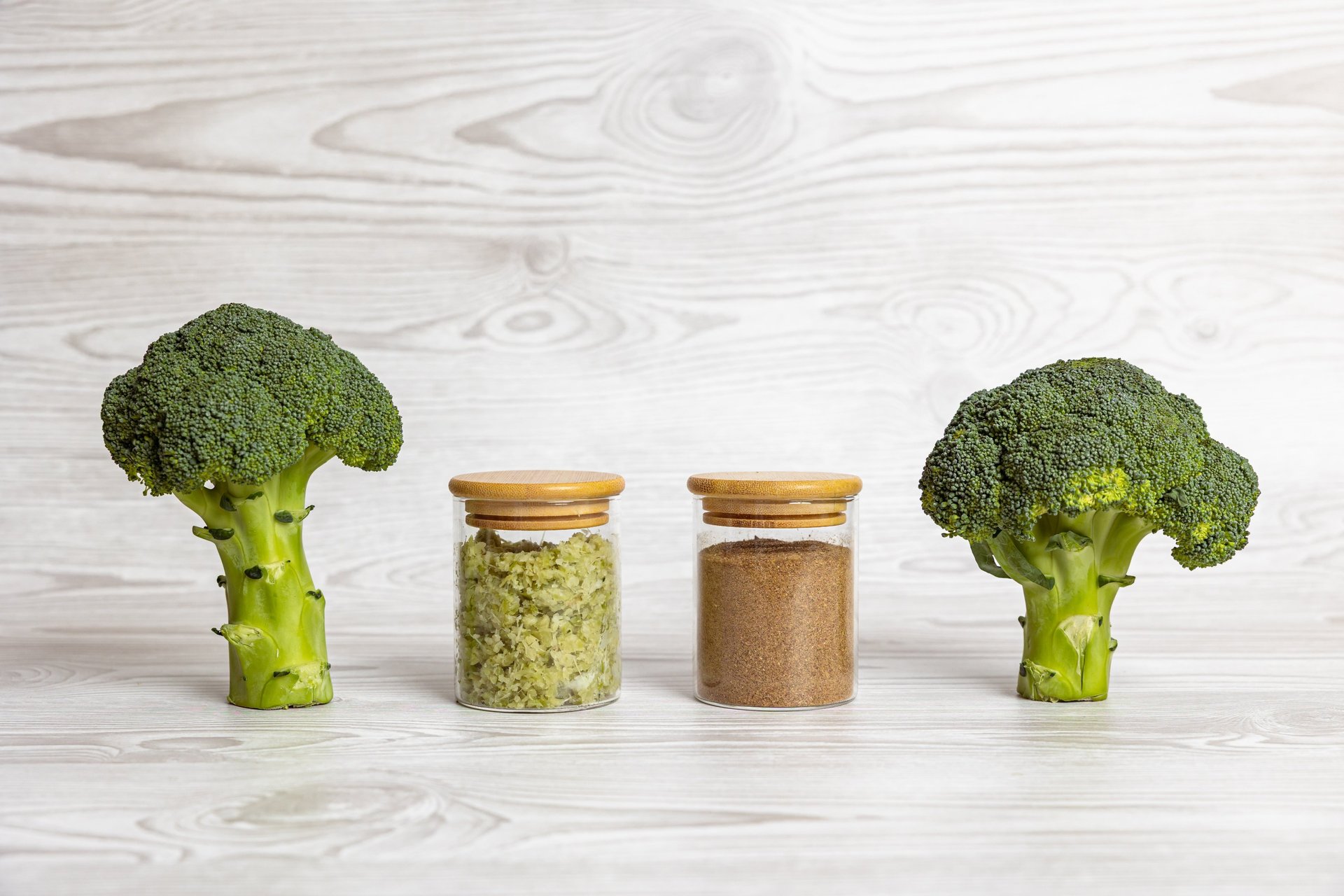
Minimal Processing Philosophy: Our philosophy is one of minimal processing, with production processes specifically optimised to preserve the intrinsic complexity of whole vegetables rather than to refine them into purified single components. For our first products (Fiba, Prota, Ola), we fractionalise vegetables that have been cultivated and consumed for centuries, with a long history of use in the UK and EU. The processing steps are intentionally limited, designed to concentrate naturally occurring fractions while retaining their native molecular diversity.
Concentrates, Not Isolates: Our Prota, Fiba, and Ola ingredients are best described as vegetable-derived concentrates, not isolates:
We focus on fractionalisation rather than synthesis, and concentration rather than isolation; accordingly, our processing steps are comparable to established conventional food processing techniques and are not intended to alter the essential nature of the source vegetable.
Our products contain multiple naturally co-occurring components present in the source vegetable.
No single protein, fibre, or compound is intentionally purified to isolation.
The ingredients retain structural and compositional characteristics consistent with established conventional food processing practices
Specifically, we avoid purified proteins, refined fibres, and chemically or enzymatically reconstructed ingredients. We do not position or claim our products as functional actives.
Based on current guidance, ingredient history, and processing methodology, we consider Prota, Fiba, Bynda, Matra and Ola (and after that Ota and Isa) unlikely to fall within the scope of novel food regulation under UK legislation. This position is subject to confirmation where required. Our approach to giving assurance to our customers and investors is to have independent lab testing (we use Intertek) and obtain independent third-party opinions (we use RSSL) to challenge, assess and substantiate our position. An example of the independent testing and opinion we obtain can be downloaded here.
The Policy Regulatory Committee (PRC) of a major supermarket has cleared our Fiba and Bynda products as non-novel and approved them for use in their supply chain. Two £bn+ Tier 1 food producers have given full Approval Status to UPP for the supply of Fiba/Bynda.
Where appropriate, we will seek confirmation from the UK Food Standards Agency via an Article 4 consultation.
Other Products in Development: Necta is intended to be used or sold as a feedstock for downstream processing rather than as a food ingredient in its own right, and is therefore not currently positioned as a food under UK novel food legislation.
The novel food status of Ova will be assessed once its final production process has been defined.
We are also at an early stage of development with a partner on a mycelium-based product that will use Necta as a feedstock. While mycelium has historically been consumed (for example, in products such as those produced by Quorn), the strain currently intended for this application was not widely consumed in the UK/EU prior to May 1997 and is therefore likely to be considered novel under UK law. We will follow the appropriate regulatory pathway and work closely with national food safety authorities, initially the UK Food Standards Agency, to ensure full compliance.
United States Regulatory Pathway: For the United States, we intend to pursue a GRAS (Generally Recognized As Safe) pathway that is appropriate to the intended use levels and dietary exposure of our ingredients. We will support customers with the documentation required for compliance with the Food and Drug Administration and for importer verification purposes.
Get in touch
© 2026. All rights reserved.
Upcycled Plant Power ('UPP') Limited
trading as "UPP" and "Freya"
Company number: 14171122
VAT Number: 428 2222 17
Registered address:
Agri-Tech Centre
Poultry Drive, Edgmond,
Newport, Shropshire
United Kingdom TF10 8JZ
Connect with us
Broccoli is a natural source of vitamin K and contains folate, potassium and beta-carotene, a provitamin A carotenoid. Our Fiba, Bynda and Prota products are a source of fibre, making them nutritionally valuable ingredients.
"Allergen-free" refers to the absence of the 14 allergens requiring declaration under UK/EU FIC. See here for our Allergen statement.


+44 1952 327 357