The Fibre Factor: Why the Fibre Gap Is a System Design Problem
The BBC’s The Fibre Factor makes a clear case that the UK’s fibre shortfall isn’t caused by a lack of knowledge - it’s the predictable outcome of a food system optimised for refinement, shelf life and cost per calorie. While trends like “fibremaxxing” and calls to eat more beans are well-intentioned, they rely on behaviour change that rarely scales. The real leverage sits upstream: reformulating everyday foods with fibre-rich, food-like ingredients that fit existing manufacturing constraints.
1/22/20264 min read
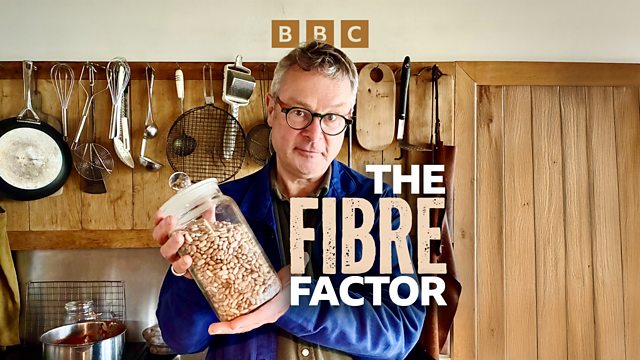
The Fibre Factor: why “eat more fibre” won’t scale unless we change how food is made
Fibre is having a moment.
Not in the way protein did - with a thousand new SKUs and a marketing arms race — but in a quieter, more structural way. It’s re-entering the mainstream conversation as something we’ve lost, something we need, and something modern diets are failing to deliver.
The BBC series The Fibre Factor (BBC Radio 4 - The Fibre Factor), presented by Hugh Fearnley-Whittingstall, captures that shift well. Across five episodes - from Munching Plants to Manufacturing through to fibre fortification, beans, and “fibremaxxing” - it asks a simple question with uncomfortable implications:
If fibre is so foundational to health, why are we eating so little of it?
The answer isn’t ignorance. It’s system design.
We didn’t “forget” fibre. We engineered it out.
The first episode’s historical arc is useful because it reframes fibre not as a new discovery, but as a baseline that modern food quietly moved away from.
For most of human history, diets were structurally fibre-rich because they were built around whole plants: roots, leaves, seeds, legumes. Fibre wasn’t a target. It was a default.
Then industrialisation did what industrialisation always does: it optimised for throughput, shelf life, uniformity and cost. And in the process, fibre became collateral damage.
Refining grains removes bran. Fractionating plants separates function. Ultra-processing turns whole food architecture into inputs and additives.
Nobody set out to create a low-fibre world. It’s simply what happens when you optimise food for industrial efficiency without simultaneously optimising for nutritional outcomes.
“Fibremaxxing” is a signal — but behaviour change is still a weak lever
Episode 2 introduces “fibremaxxing”, the online trend pushing people to deliberately chase fibre targets the way they once chased protein.
That’s interesting - not because trends solve systemic problems, but because they reveal a rising demand for tools people can act on. The public is looking for a new anchor: not restriction, not purity, but something measurable that maps to health.
But even if fibremaxxing is here to stay, it won’t close the gap at population scale.
Most people won’t track fibre long-term. They won’t weigh beans, count grams, or redesign their meals every day. Not because they’re lazy, but because food decisions sit inside real constraints: time, budget, habit, family preferences, and what’s available. This is why behaviour change remains unreliable as a primary strategy.
If we want fibre intake to rise meaningfully, it has to happen upstream — through how everyday food is formulated.
The real question isn’t “can we eat more fibre?” It’s “can we build fibre back into defaults?”
Episode 3 goes directly to the core issue: the foods that dominate modern diets — bread, pasta, rice, packaged meals — are often fibre-poor by design. So the problem isn’t solved by telling people to eat like nutritionists.
It’s solved by improving the foods people already buy.
This is where the industry’s next phase becomes clear:
Can we fortify staples without compromising taste and texture?
Can ultra-processed foods ever become fibre-rich?
Can we do it without raising cost, breaking supply chains, or adding ingredient-list complexity?
These aren’t consumer questions. They’re manufacturing questions.
And they point to the same conclusion we keep coming back to: low-friction reformulation is the only approach that scales.
Because reformulation doesn’t fail due to lack of ambition. It fails due to friction: process disruption, sensory risk, procurement uncertainty, and complexity that slows decision-making.
Beans are the obvious answer — and the hardest one to mainstream
Episode 4 focuses on beans and pulses, and it’s hard to argue with the case: beans are fibre-rich, affordable, nutritionally dense, and comparatively low-impact.
They are also, in the UK at least, under-consumed outside a narrow set of formats (the baked bean exception is telling).
This is a classic example of a food that makes perfect sense on paper but struggles in practice. Not because beans are “bad”, but because the system around them isn’t built to make them effortless.
You can’t scale fibre by asking the whole population to suddenly love lentils.
You scale fibre by embedding it into familiar formats — the foods people already eat — without requiring a cultural conversion.
The future of fibre is not a new diet. It’s better formulation.
By the final episode, the series moves toward solutions: activism, education, cooking, and community-level change.
All of that matters. But the biggest lever still sits upstream.
If the UK is serious about addressing obesity and diet-related disease, fibre has to stop being a personal responsibility and start becoming a system outcome.
That means ingredients and processes that make it easier for manufacturers to:
increase fibre content without wrecking sensory performance
simplify formulations rather than “add another additive”
keep products affordable
work inside existing lines and supply chains
This is exactly why fibre is not just a nutrition story. It’s an ingredient infrastructure story.
At UPP, we think about fibre the same way we think about protein and sustainability: not as a claim, but as a design constraint. The question is never “how do we convince people to eat differently?”
It’s “how do we improve everyday food without asking people to try harder?”
Because when you change what goes into food — quietly, at scale — you change what comes out of the system.
And that’s how fibre stops being a trend, and becomes a default again.
Get in touch
© 2026. All rights reserved.
Upcycled Plant Power ('UPP') Limited
trading as "UPP" and "Freya"
Company number: 14171122
VAT Number: 428 2222 17
Registered address:
Agri-Tech Centre
Poultry Drive, Edgmond,
Newport, Shropshire
United Kingdom TF10 8JZ
Connect with us
Broccoli is a natural source of vitamin K and contains folate, potassium and beta-carotene, a provitamin A carotenoid. Our Fiba, Bynda and Prota products are a source of fibre, making them nutritionally valuable ingredients.
"Allergen-free" refers to the absence of the 14 allergens requiring declaration under UK/EU FIC. See here for our Allergen statement.




+44 1952 327 357